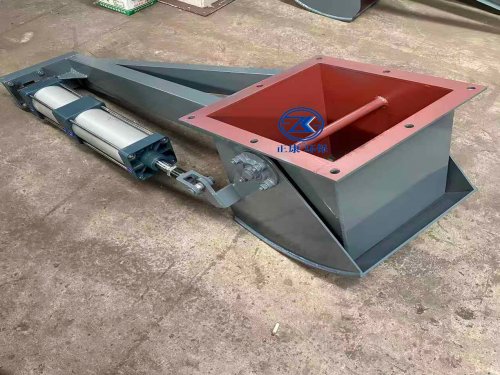
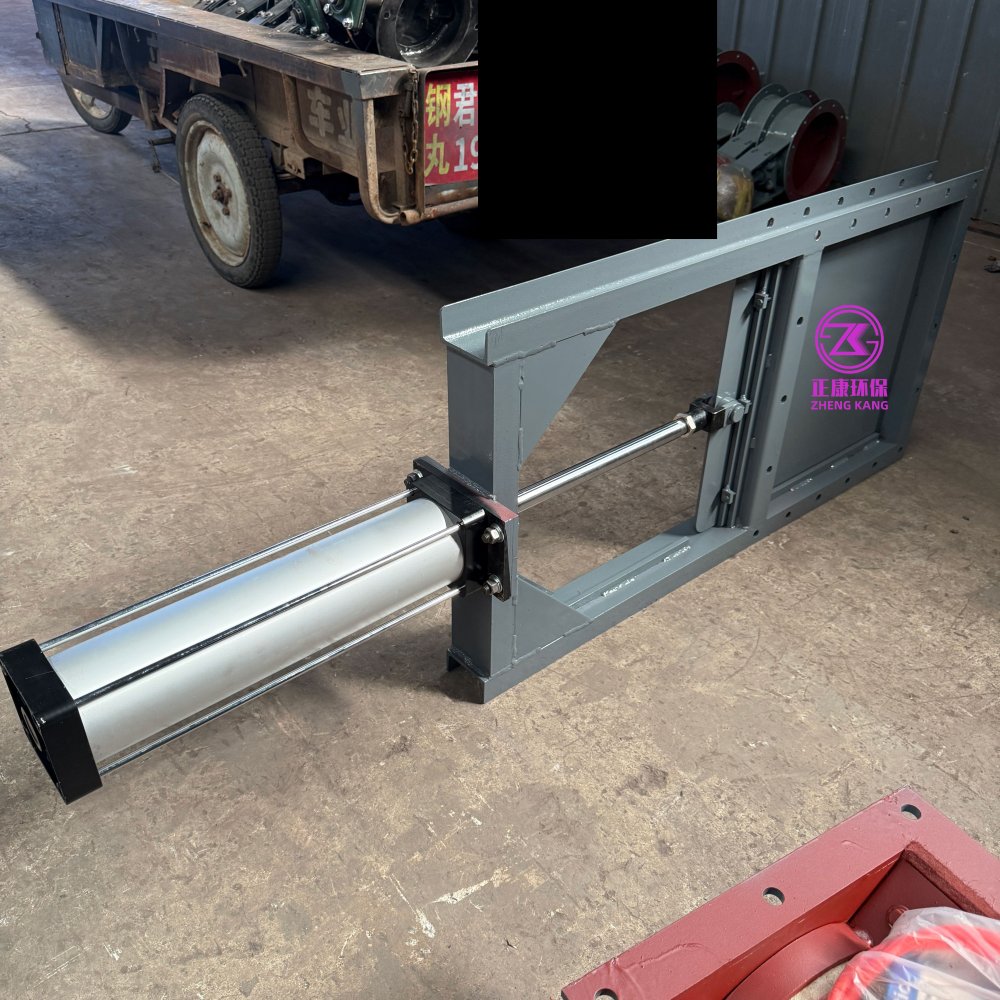
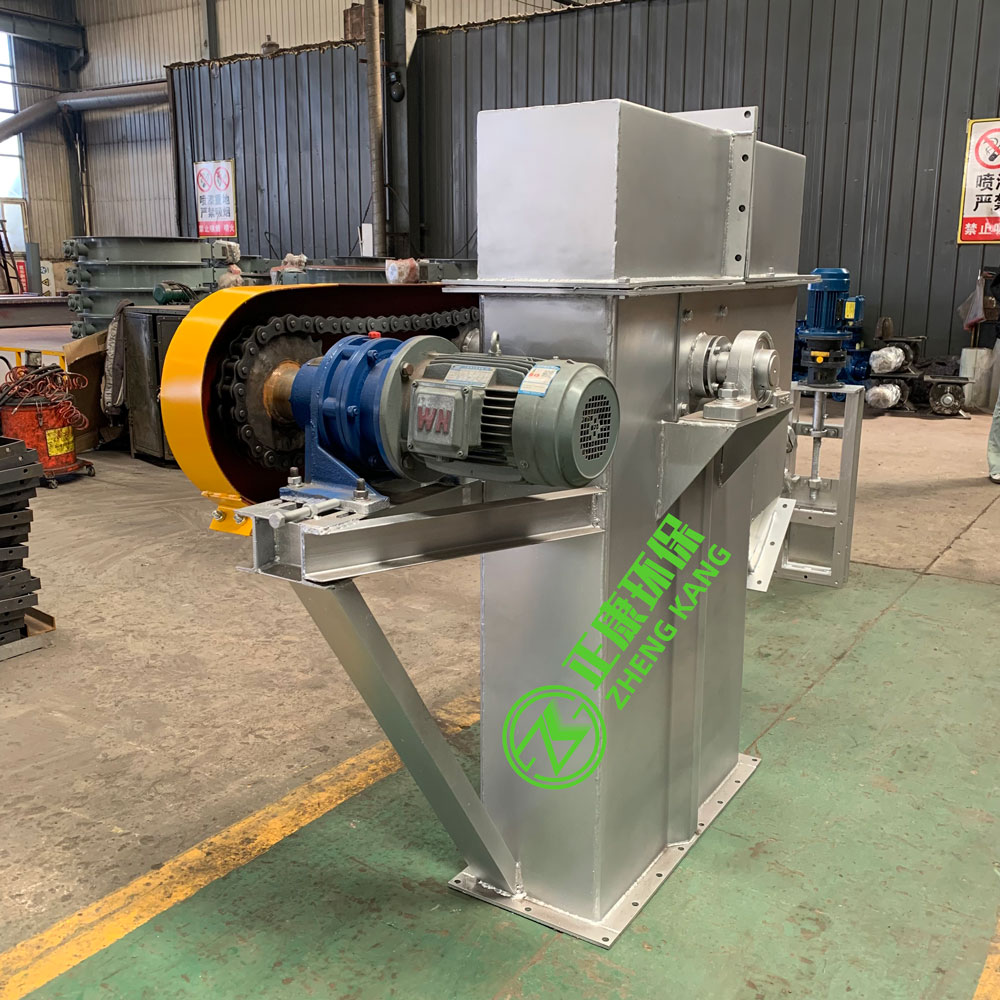
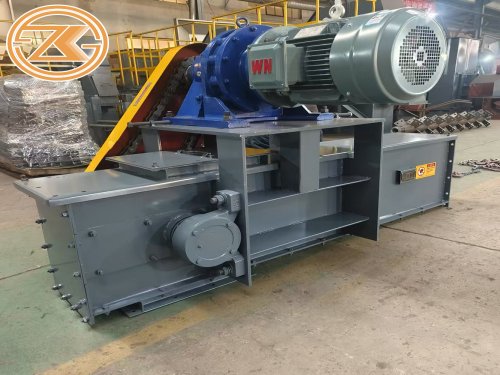
Every product we produce must undergo strict debugging and inspection. The specifications of the pneumatic sector valve products are as follows:
Good sales, structural composition
1. Valve body: usually composed of a left valve body, a middle valve body, and a right valve body. They together form the outer shell structure of the valve, providing support and protection for internal components, and also serving as a channel for medium circulation.
Valve plate: It is a key component for realizing valve opening and closing, usually in the shape of a fan. It controls the flow or cutoff of the medium through rotation. The valve plate is embedded with rubber sealing rings to protect the sealing performance.
3. Drive device: mainly includes clamping, releasing cylinders, and flipping cylinders. The clamping and releasing cylinder drives the left and right valve bodies through lever pairs and spiral screw pairs to complete the clamping and releasing process; The flipping cylinder drives the valve plate to complete the switching action.
4. Sealing components: The rubber sealing ring is embedded in the flap and has the characteristics of high temperature resistance, good sealing performance, easy replacement, and long service life. It is a key component for protecting the sealing performance of the valve.
5. Other components: including screw pair, lever, base, support column, etc. The screw pair cooperates with the lever to transmit the power of the cylinder to the valve body and valve plate, achieving corresponding actions; The base and support column form a rigid structure, providing stable support for the entire valve.
Secondly, the working principle
1. Sealing process: The compressed air from the air pressure station drives the pneumatic clamping cylinder, and the thrust generated is directly applied to the active valve stem through the crank, causing it to rotate. The three valve stems rotate synchronously through the connecting rod mechanism. The left and right threads on both ends of the valve stem drive the corresponding left and right nuts, causing the left valve body and the middle valve body to move relatively symmetrically with the valve plate as the middle while compressing or stretching the corrugated pipe, thereby clamping the sealing rings of the two valve bodies and compressing the rubber sealing ring of the valve plate to achieve sealing pressure.
2. Opening process: Firstly, clamp and release the cylinder to loosen the seals of the left and middle valve bodies, and separate the two valve body sealing rings from the valve body rubber sealing ring. Then, the flipping cylinder drives the valve plate, and by pushing and pulling the earrings on the valve plate, it drives the valve plate to rotate and open.
3. Closing process: In contrast to the opening process, the valve plate is first rotated to the closed position by the flap cylinder, and then the cylinder is clamped and released to move the left and middle valve bodies towards the valve plate. The two valve body sealing rings clamp the rubber sealing ring of the valve plate to achieve sealing closure.
Performance Characteristics
4. Good sealing performance: The rubber sealing ring is embedded in the flap and closely matches the valve body, which can prevent medium leakage and maintain good sealing performance even under harsh working conditions such as high temperature and high pressure.
Compact structure: Novel structure, light weight, small volume, small space occupation, easy to install and maintain, especially suitable for places with limited space.
6. Easy to operate: The opening and closing action of the valve can be achieved by driving the cylinder with compressed air. The operation is simple and fast, with fast movements, which can meet the requirements of automatic control. It can also be controlled through a single remote control or multiple distance controls, or manually operated using the valve's own device in abnormal situations.
7. Excellent cutting performance: It can cut isolation media in pipelines, providing high-performance partitions for toxic, harmful, and flammable gas pipelines in industries such as metallurgy, chemical engineering, and environmental protection.
Thirdly, the application industry
Metallurgical industry: In metallurgical enterprises such as steel plants, pipelines used to cut off and control gas and other media are used to ensure the safety and stability of the production process.
Chemical industry: Suitable for conveying pipelines of various chemical raw materials, stable gases and other media, achieving pipeline isolation and flow control, and confirming the safe operation of chemical industry production.
Environmental protection industry: used in environmental protection projects such as sewage treatment and exhaust emissions to control the circulation of gas or liquid media, protect the normal operation of environmental protection equipment, and treat pollutants.
Promote the advantageous concept of "learning as the source, innovation as the priority" to all employees, create a favorable environment and conditions for learning and innovation. The pneumatic sector valve products sold by the company are welcome to be consulted at any time, and all employees look forward to cooperating with you.