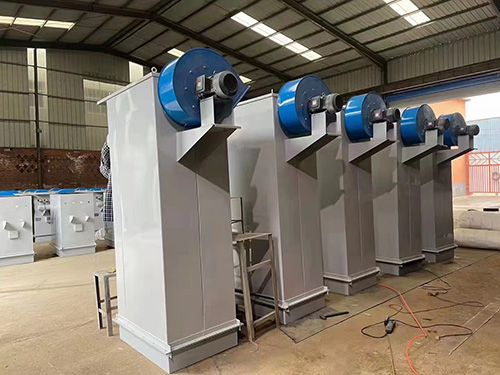
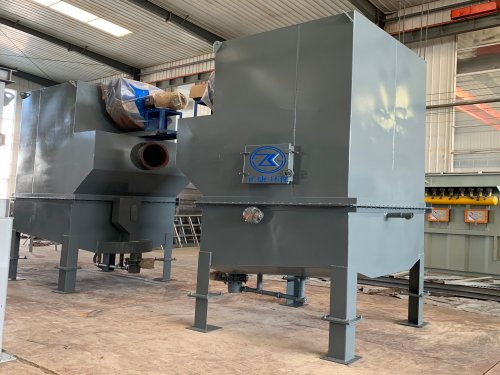
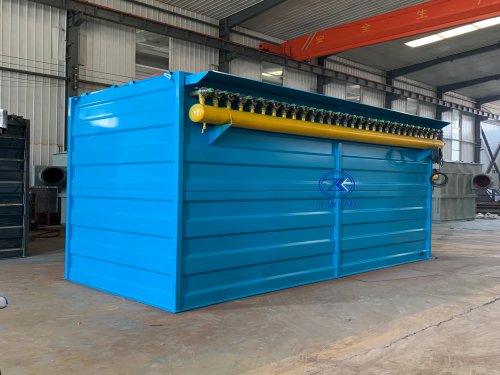
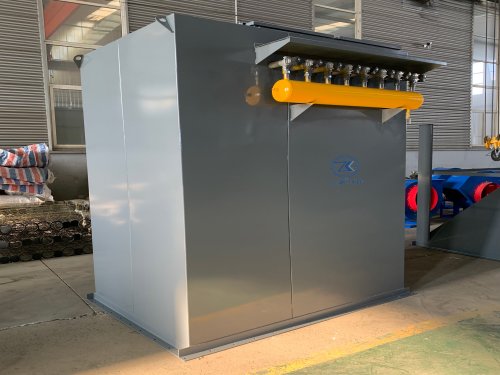
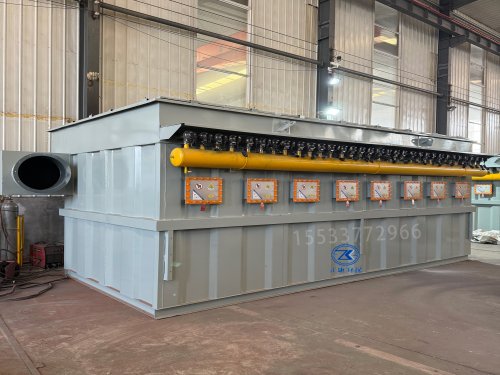
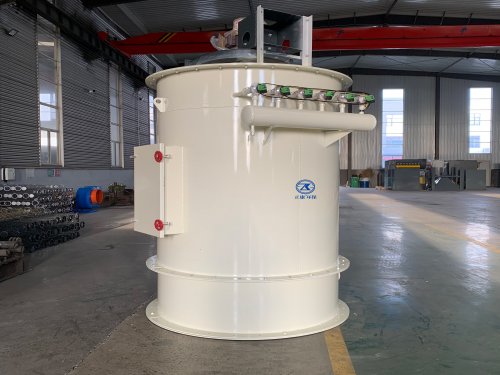
Small pulse dust collector
A small pulse dust collector refers to a device that removes dust adhering to a filter medium (bag or filter cylinder) by blowing compressed air; According to the size of the dust collector, it is controlled by a pulse controller or PLC. Each time, a set of pulse valves is opened to remove dust from the control bag or filter cylinder, while other bags or filter cylinders work normally. After a period of time, the next set of pulse valves is opened. The lower part is composed of an ash hopper, an upper box, a middle box, and a lower box, and the upper, middle, and lower boxes are divided into compartments. During work, dusty gas enters the ash hopper through the intake pipe, and dust particles directly fall into the bottom of the ash hopper. Fine dust particles rotate upwards with the airflow and enter the middle and lower boxes. The outer surface of the filter bag has accumulated dust. The filtered gas enters the upper box to the clean gas collection pipe exhaust pipe, and is discharged to the atmosphere through the exhaust fan. During operation, dusty gas enters the ash hopper through the intake pipe. Coarse dust particles directly fall into the bottom of the ash hopper, while fine dust particles enter the middle and lower boxes with the airflow. Dust accumulates and adheres to the outer surface of the filter bag. The filtered gas enters the upper box and is discharged into the atmosphere through the exhaust fan via the clean gas collection pipe exhaust pipe. The dust removal process is to cut off the air outlet duct of the room, so that the bag in the room is in a state of no airflow (stop air dust removal). Then open the pulse valve and use compressed air to spray pulses to remove dust. The closing time of the cut-off valve is sufficient to protect the dust peeled off from the filter bag after spraying from settling into the ash hopper, avoiding the phenomenon of dust separating from the surface of the filter bag and adhering to the adjacent filter bag surface with the airflow, thoroughly removing the dust from the filter bag. The exhaust valve, pulse valve, and ash discharge valve are automatically controlled by a programmable controller. Dust laden gas enters through the inlet. When passing through the ash hopper, some large particles of dust in the gas fall directly into the bottom of the ash hopper through inertia and gravity. The dusty gas enters the filtering area of the middle box filter bag through the ash hopper. Gas passes through the filter bag, and dust clogs the outer surface of the filter bag. The purified gas enters the upper box through the filter bag port and is then discharged through the air outlet.
The dust layer on the filter bag of the small pulse dust collector thickens with the extension of filtration time, and the resistance of the dust removal equipment also increases. When the resistance of the equipment rises to the set value, the dust cleaning device begins to clean the dust. Close the compartment lift valve, cut off the filtered airflow, and then open the electromagnetic pulse valve. Compressed air is suitable for expanding at the speed of the above box in a short period of time and flowing into the filter bag, causing the filter bag to expand, deform, and vibrate. Under the action of reverse airflow scouring, the dust attached to the outer surface of the filter bag is peeled off and falls into the ash hopper. After cleaning, the electromagnetic pulse valve is closed, the lift valve is opened, and the room returns to the filtering state. Each room is cleaned in sequence, from the room with good sales to the next cleaning, which is a cleaning cycle. The dust left after filtering and removing the ash falls into the ash hopper and is then centrally discharged by the ash removal device at the hopper mouth.
Small pulse dust collector