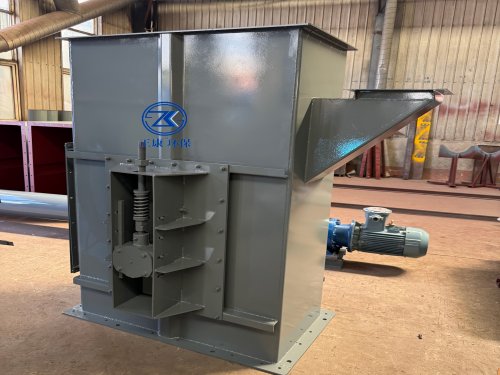
The working principle of bucket elevator is as follows:
The material enters from the feed inlet at the bottom of the bucket elevator and rises with the hopper installed on the chain or belt. When the material reaches the top of the machine, it will be automatically unloaded due to gravity or the action of the pushing device. When the hopper returns, it will pass through the feeding area again and cycle continuously up and down. Specifically:
Material input: The material enters from the feeding port at the bottom of the bucket elevator. This process can be completed with the help of gravity flow, conveyor belt transportation, or other feeding equipment to confirm that the material enters the elevator uniformly and stably.
Traction and lifting: The hopper is fixed on the traction chain or tape. As the traction belt moves, the hopper lifts the material from low to high. The traction belt usually revolves around the head wheel and bottom wheel, forming a closed-loop motion.
Material unloading: When the hopper reaches the top of the machine, due to gravity or the action of the pushing device, the material is unloaded from the hopper and enters the receiving groove or the required position.
Hopper return: After unloading, the hopper returns to the bottom along the traction belt and enters the feeding area again for the next round of lifting operation.
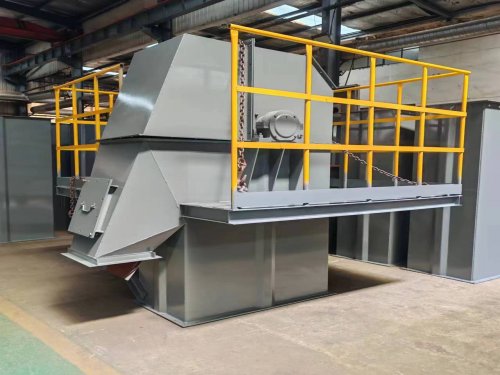
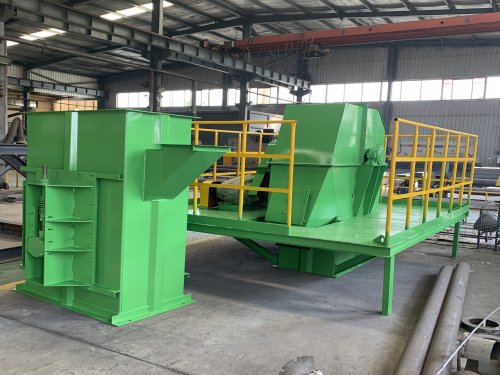
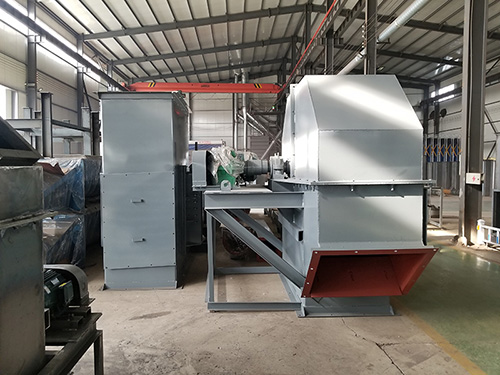
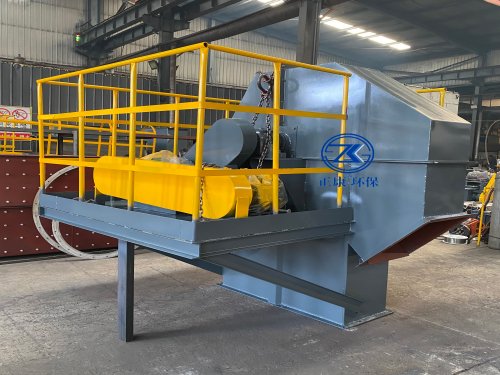
The main structure of a bucket elevator includes a housing, a head wheel, a bottom wheel, a traction belt (chain), and a hopper. Among them, the traction belt (or chain) is a part of the transmission device, responsible for lifting the hopper and its loaded materials from low to high; The hopper is the main loading component of the bucket elevator, responsible for scooping up materials from a low point and lifting them up with the elevator; The driving device usually consists of a motor, reducer, coupling, etc. This is the power source of the bucket elevator.