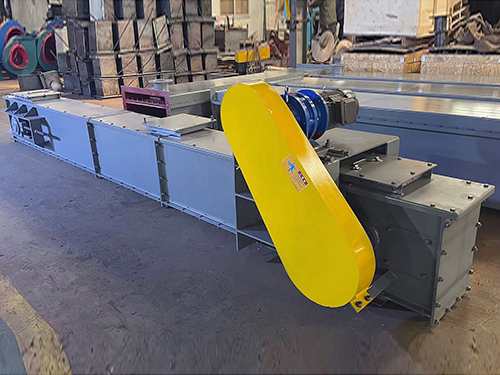
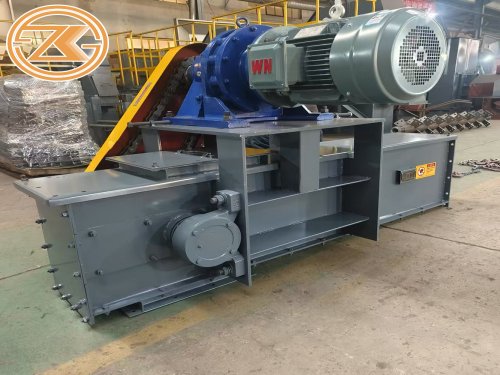
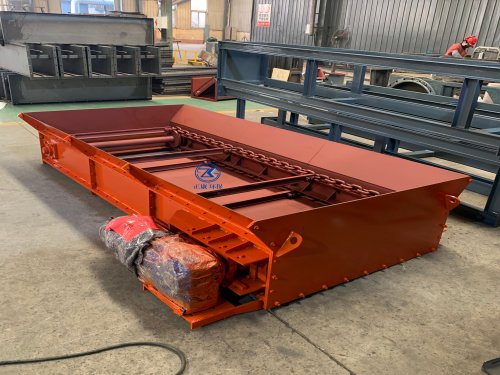
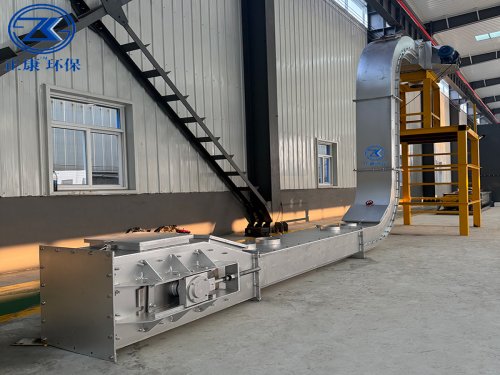
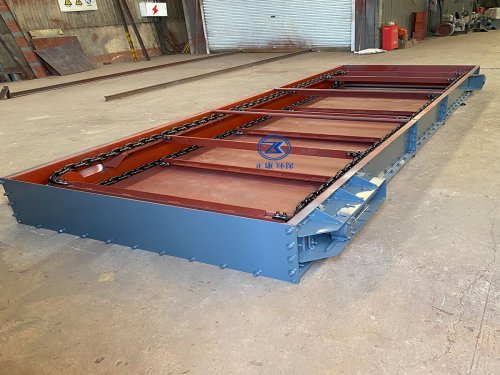
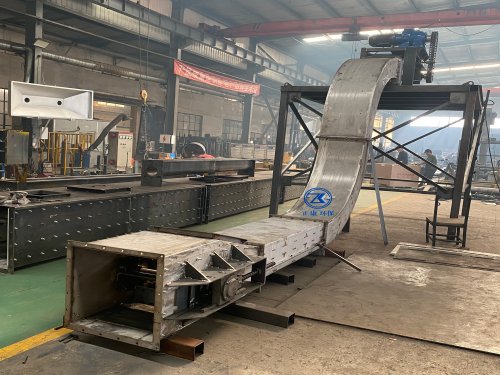
Scope of application of scraper conveyor:
Scraper conveyor; It can transport coal powder, crushed coal, cigarette ash, carbon black, ammonium bicarbonate, pyrite powder, ammonium chloride, copper concentrate powder, aluminum oxide powder, gypsum powder, limestone powder, baking soda powder, urea, activated carbon, sodium chloride, calcium silicate, asbestos powder, synthetic resin, rubber powder, calcium carbide, clay, synthetic fertilizer, powder insecticide, barium sulfate, ammonium sulfate, soda ash, powder pharmaceuticals, wheat, soybeans, rice, sugar, starch, wood chips, sawdust, polyvinyl alcohol synthetic detergent, fly ash phosphate fertilizer, etc.
The general scraper conveyor is not suitable for conveying materials that are high-temperature, toxic, explosive, flammable, worn, corrosive, have strong adhesion, are suspended, have good fluidity, have good hardness, are brittle, and do not want to break. When these characteristic materials need to be embedded in scraper conveyors, they can be designed as: high temperature resistance (mainly based on actual reports) (mainly based on actual reports) (mainly based on actual reports), corrosion resistance (mainly based on actual reports) (mainly based on actual reports) (mainly based on actual reports), performance (mainly based on actual reports) (mainly based on actual reports), full airtightness, explosion-proof (mainly based on actual reports) (mainly based on actual reports), and other special models. The company can customize production for users.
The installation of scraper conveyor should be carried out as follows:
1) Positioning of scraper conveyor: First, determine the position of the machine head and tail, and then determine the centerline of the scraper conveyor.
The second is to lay the middle groove: lay the middle groove according to the centerline of the conveyor. If non-metallic trough boxes are used, the middle trough is paved with bricks and cement prefabricated panels, and then bonded with cast stone lining panels. When laying cast stone lining boards, pay attention to flatness, minimize joints, and stagger longitudinal gaps to prevent gaps from being ground into grooves during work. The surface of the conveyor needs to be flat when laying. If the plane of the conveyor is bent too much, it will inevitably lead to uneven force on the two chains, accelerating the wear between the chain and the groove wall casting stone or even the chain jamming. The overlapping of each section of the groove should be smooth and without steps. Due to the structural limitations of the groove itself, the deflection of adjacent middle grooves in the vertical direction should not be too large. If the conveyor is not laid straight, the transportation power consumption will increase. Clean up the accumulated coal or debris on the machine track.
3) Head and tail installation: The head and tail should have designated maintenance and upkeep space. The centerline of the sprocket should be perpendicular to the centerline of the conveyor and protected horizontally.
4) Installation of scraper chain: The scraper chain should be connected in advance before installation, and the scraper should be evenly distributed in the chain. If there are two chains, the same length or assembly should be selected based on the matching chain at the factory. The chain must not be twisted. The edge of the chain weld is facing upwards to prevent the chain and sprocket from clamping.
5) Inspection and empty operation: After the installation of the scraper conveyor, various inspections should be carried out and the conveyor should be started. Run empty for 2 hours, mainly checking whether the drive device and scraper are running normally. At the same time, tighten the adjacent middle slots, tighten the chain again, and adjust the chain length. Two weeks before the scraper conveyor starts working, special attention should be paid to the tightness of the chain. If there is a driving device at the rear, please click on the driving device to check. When there are two or more loose chains on the upper chain of the tail sprocket, it is necessary to tighten or dismantle the chains to reduce their length. If organic (based on actual reports) (based on actual reports) (mainly based on actual reports), the head drive device needs to reverse and jog the motor when there are two or more loose links on the upper chain at the head sprocket. It is also necessary to tighten or dismantle the chain to reduce the loop.