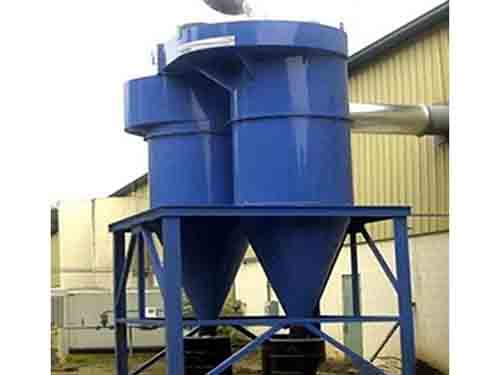
XLP-A type cyclone dust collector
The XLP/A and XLP/B cyclone dust collectors are also centrifugal cyclone dust collectors with dust isolation chambers. Good dust removal efficiency. The original design system considered using this dust collector in general industrial ventilation systems, but many units have applied it to flue gas dust removal in industrial boilers, achieving good dust removal effects.
(1) Curved structure and working principle of XLPA and XLP/B cyclone dust collectors
The XL-P/A and XLP/B cyclone dust collectors (prototype CLP/A and CLP/B) are improved designs based on the practice of the C-type cyclone dust collector. After systematic testing and use by some units, it has been proven to be a dust collector with good performance.
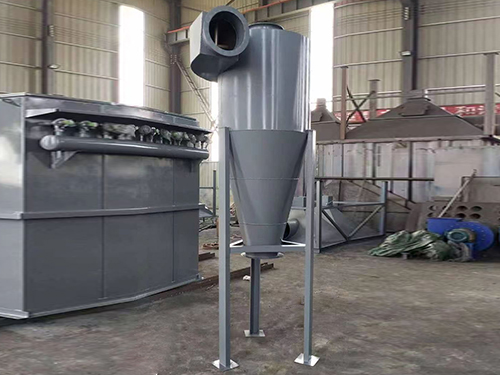
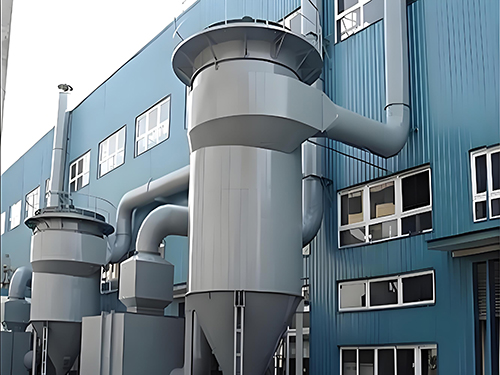
XLP/A type cyclone dust collector; The structure of the dust collector is similar to that of a C-type cyclone dust collector, with the cylinder part still being a double cone, the upper part of the dust isolation chamber still being a straight line, and the lower part being a spiral line, so that the return air from the dust isolation chamber enters along the lower cylinder to avoid disturbing the internal airflow of the body.
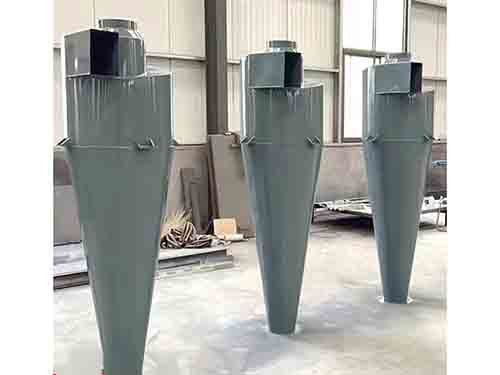
Compared with the C-type cyclone dust collector, the structure of the B-type cyclone dust collector differs greatly in XLP. The cylinder of the XLP/B cyclone dust collector is designed as a single cylinder and single cone, and the dust isolation chamber is spiral shaped.
The working principle of XLP/is similar to that of XLP/B cyclone dust collector, which means that after the dusty flue gas enters the dust collector, the gas rotates and separates up and down to form a double vortex motion. The ash particles produce a strong separation effect at the bottom of the exhaust pipe, that is, at the boundary of the double vortex. The lighter ash particles are carried from the upper vortex airflow to the upper part, forming a strong rotating ash ring under the top cover. The accumulation of ash particles is particularly led out from the upper hole of the dust isolation chamber, and introduced into the dust collector through the lower spiral groove of the dust isolation chamber from the return air outlet on the outer wall of the dust collector. The lower part of the cylinder is combined with the internal airflow, and the ash particles are separated and fall into the ash hopper. The other part of the thicker and heavier ash particles are driven by the lower vortex, and through a similar process as the upper vortex, the ash particles are separated along the lower part of the dust collector and discharged into the ash hopper.
(2) Characteristics of XLPA and XLP/B cyclone dust collectors
The common feature of XLP/A and XLP/B cyclone dust collectors is that the inlet position is low, and the inlet position is semi spiral (XLP/A) or spiral (XLP dust isolation chamber/B).
In order to reduce the position of the air inlet and create enough space to form an upper vortex, the dust ring (dust particles) formed under the top cover is introduced into the cone part through a dust isolation chamber.
The semi spiral or spiral dust isolation chamber can introduce the return air of the isolation chamber into the equipment along the cylindrical tangent direction to avoid disturbing the internal airflow, and can also introduce the airflow conditions of the dust isolation chamber.
Another feature of the XLP/A cyclone dust collector is that the cylinder is designed in a double cone shape, with a larger cone angle on the upper cone, forming a protrusion and facilitating the formation of a dust ring. Concentrated dust and flue gas are introduced into the dust isolation room from the cone side intersection to avoid separation of dust particles, which are swept into the rotating (core) airflow and reduce dust removal efficiency. The design of the double cone also helps to reduce circumferential velocity and equipment resistance. In addition, the design of the double cone is also beneficial for the slender shape of the cone, reducing the radial velocity of the airflow, and avoiding the separation of ash particles from being sucked into the rotating airflow and carried out of the dust collector.
The XLP/B cyclone dust collector is made into a single cone with a smaller cone angle. The small cone angle and long cone shape make the downward and upward rotating airflow inside the dust collector smooth, reducing the collision and friction efficiency of ash particles and lowering resistance.
XLP-A type cyclone dust collector