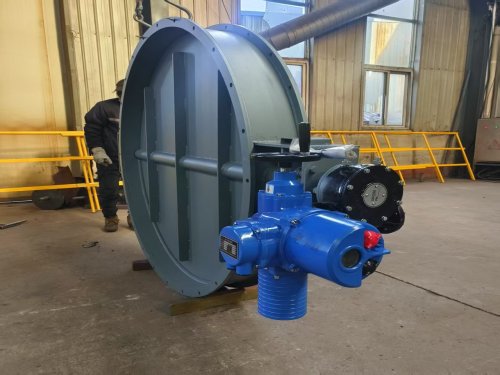
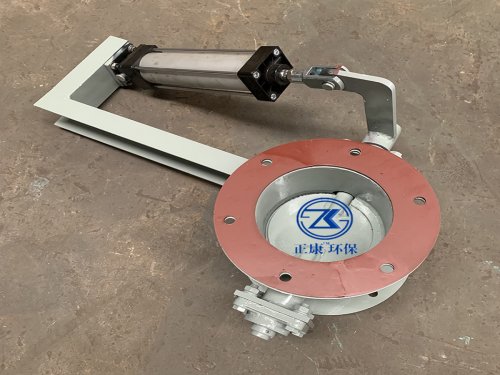
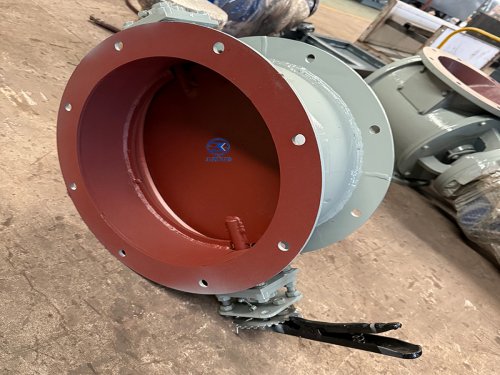
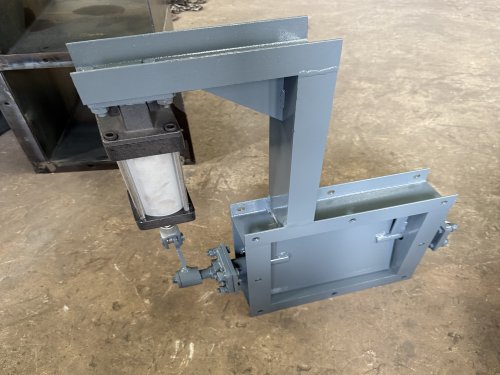
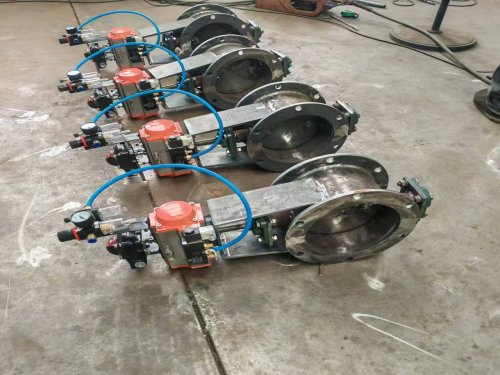
The working principle of an electro-hydraulic butterfly valve is to provide power through a hydraulic system to drive the opening and closing of the butterfly valve. Specifically, the electro-hydraulic butterfly valve combines the characteristics of a hydraulic system and an electric actuator, providing pressure through a hydraulic power source (such as a hydraulic pump) to drive the hydraulic cylinder, thereby controlling the rotation of the valve plate of the butterfly valve, and achieving the opening, closing, and adjustment of the fluid channel.
Detailed explanation of working principle
Hydraulic system: The hydraulic system of the electro-hydraulic butterfly valve includes components such as hydraulic pumps and hydraulic cylinders. When the hydraulic pump is powered on, it starts working and provides pressure oil. Pressure oil is transported through pipelines to hydraulic cylinders, driving their movement.
Electric actuator part: The electric actuator receives control signals, such as 4-20mA current signals or 0-10V voltage signals, to control the start and stop of the hydraulic pump, as well as adjust the pressure and flow of the hydraulic system. Electric actuators provide feedback on the actual opening and status of valves to the control system through sensors or limit switches, achieving closed-loop control and remote monitoring.
Valve plate rotation principle: The valve plate of the electro-hydraulic butterfly valve is disc-shaped and installed in the diameter direction of the valve body. When the hydraulic cylinder drives the valve stem to rotate, the valve stem drives the valve plate to perform a 0 ° -90 ° rotational motion around the axis in the cylindrical channel of the valve body. When the valve plate rotates to 90 °, the valve is fully open; When the valve plate rotates to 0 °, all valves are closed.
structural characteristics
Electro hydraulic butterfly valves are usually composed of a hydraulic system, an electric actuator, and the butterfly valve body. Its structural features include:
Diverse power sources: can use power sources with different voltages such as AC220V, AC380V, DC24V, etc.
Diverse control signals: can receive 4-20mA current signals or 0-10V voltage signals for control.
Feedback function: With feedback function, the actual opening and status of the valve can be fed back to the control system through built-in sensors or limit switches, achieving closed-loop control.