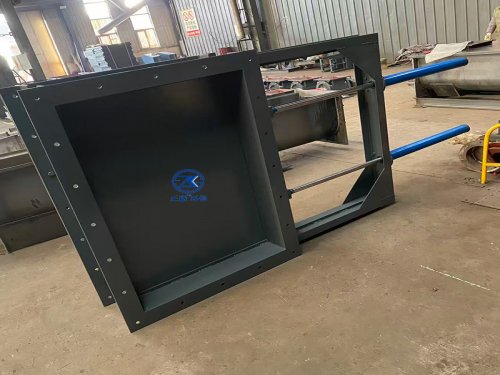
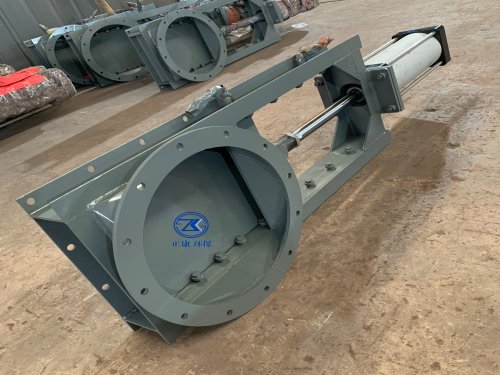
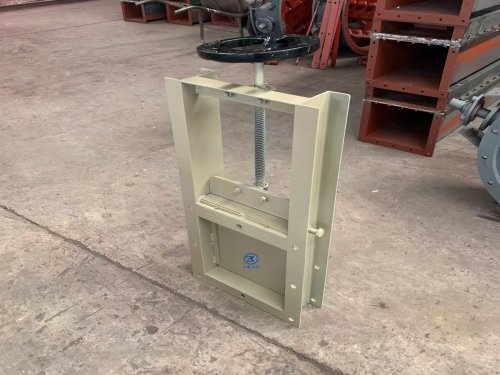
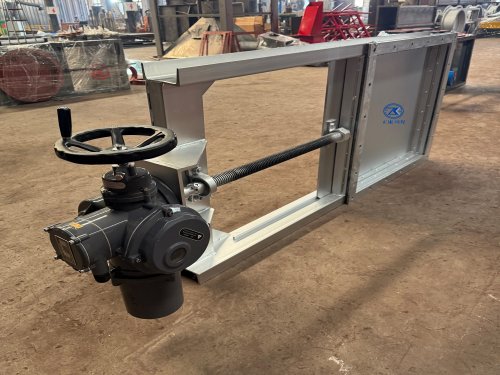
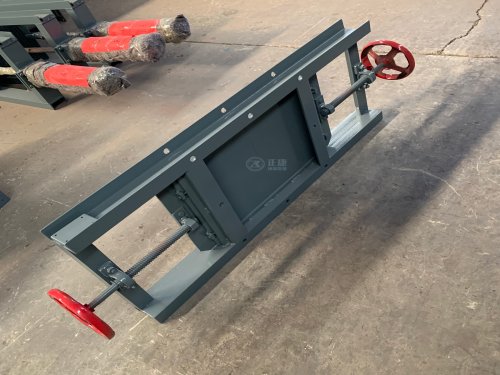
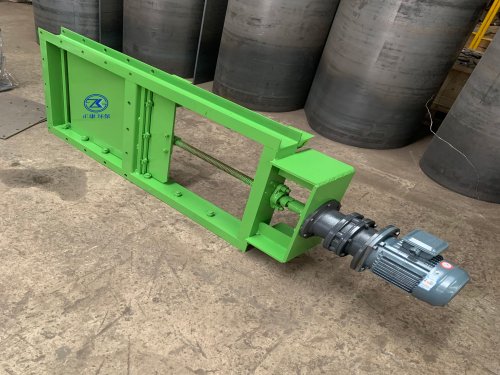
Double cylinder electro-hydraulic plug valve is an industrial valve that combines electronic control and hydraulic transmission. Due to the stability and strong thrust of dual cylinder drive, it is commonly used to control the flow and cutoff of various media such as powders and slurries, and is widely used in industrial scenarios under heavy working conditions. Here is a detailed introduction:
1、 Core structure
1. Valve body and valve plate: The valve body is mostly welded with carbon steel, and some can be customized with stainless steel. The structure is firm and wear-resistant (based on actual reports); Valve plates are usually designed with a blade type, with some using a double gate structure. The bottom is processed into a blade like shape, which can cut off fibers and soft materials. At the same time, the valve plate is tightly attached to the rubber sealing ring, which is fixed by a metal pressure sleeve and can be easily replaced in case of damage.
2. Dual cylinder drive mechanism: The core consists of two electro-hydraulic push rods that respectively control the relevant valve plates. The electro-hydraulic push rod is connected to the plug valve through a bracket. Compared with single cylinder drive, the thrust is more balanced, which can avoid offset when the valve plate moves, prevent jamming or material leakage.
3. Auxiliary components: Some models are equipped with manual screw control handwheels for manual operation in emergency situations, such as power outages; The pulley device can replace the traditional groove inside the valve body, reducing dust accumulation. Meanwhile, the control system includes position sensors to monitor the position of the valve plate and provide feedback signals.
2、 Working principle
Electric energy "is the core of its action → hydraulic energy → conversion of mechanical energy. When the control system receives the opening and closing command, the motor starts and drives the hydraulic pump to operate. The hydraulic pump pressurizes the hydraulic oil and delivers it to two hydraulic cylinders. High pressure oil drives the piston in the hydraulic cylinder to move, which in turn drives the valve plate to move back and forth in a straight line along the valve body - when the valve plate is lifted, it opens the channel and the medium can pass smoothly; When the valve plate approaches the valve seat, cut off the passage. When the sensor detects that the valve plate has reached the preset position, the feedback signal will prevent the motor from working, and the hydraulic system will maintain the current state of the valve plate.
3、 Key features
1. Stable operation: The dual cylinder drive ensures even force distribution on the valve plate, with no jamming during the opening and closing process and good sealing performance, which can avoid material leakage and air leakage problems. It is suitable for conveying control of powder and other materials that are prone to leakage.
Widely applicable scenarios: Suitable for temperature environments with a tolerance of ≤ 150 ℃, suitable for media such as powder, coal slurry, and ash slurry, and can cope with harsh working conditions in industries such as metallurgy and mining. Some materials can also adapt to corrosive media after customization.
3. Easy maintenance and operation: simple structure, strong universality of parts, and convenient maintenance; Supporting remote electronic control and manual emergency operation, it can adapt to automated production lines and respond to sudden power outages.
4. Main applications: Widely used in metallurgy, mining, power, chemical, building materials and other industries, such as mining powder conveying pipelines, power plant ash removal and material dropping systems, cement plant powder material transportation, etc. It is a common device used to control the flow of materials in various feeding systems or to urgently cut off materials.