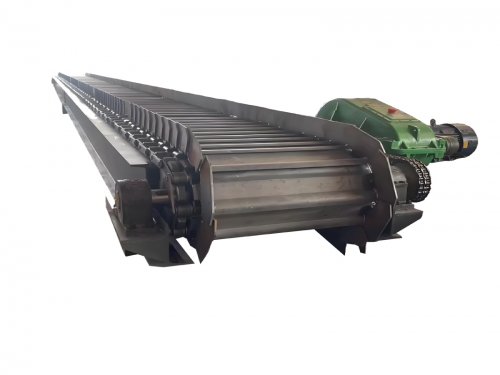
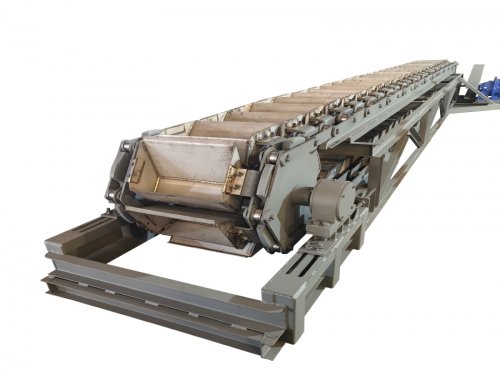
Scale conveyor is a structural form of plate conveyor, which is one of the equipment for conveying high-temperature materials and block materials. It can transport high-temperature materials because it uses metal plates or cast iron plates as the tank body (temperature can reach 250 ° C), which can withstand certain impact forces. At the same time, due to the traction force of its traction chain, it has a large load-bearing capacity and a long conveying distance. It has the advantages of low power consumption and is an ideal equipment for transporting high-temperature materials in industries such as building materials and electricity. Variable frequency speed regulation can be equipped according to on-site requirements for easy adjustment of conveying volume and matching with the process.
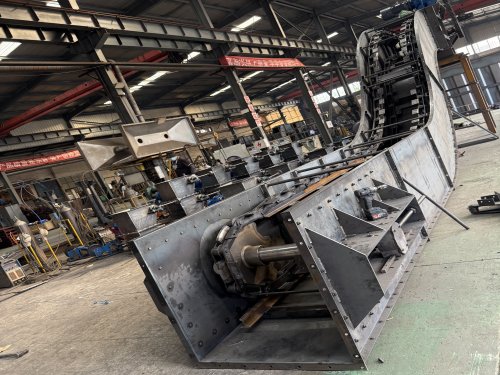
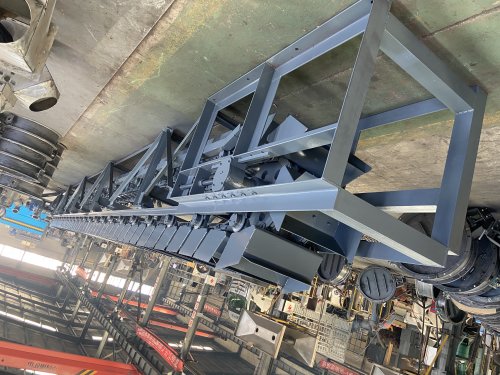
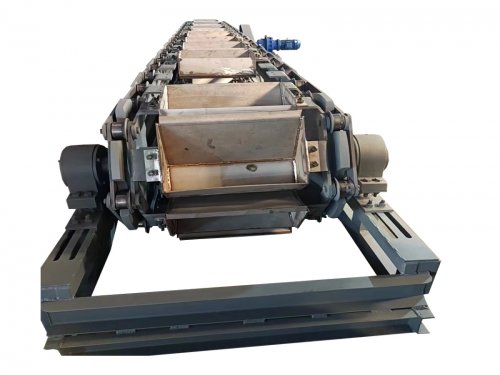
The basic structure of a scale conveyor includes a main transmission device, a driving device, a running device, a frame, a screw tightening device, etc.
working principle
The motor of the transmission device drives the main drive shaft to rotate through a reducer and coupling, and two active sprockets drive two chains. The conveyor scales are overlapped and fixed on the two chains. The supporting wheel on the scale plate is guided by the guide rail on the frame, and the material on the scale plate is transported to the unloading point through the transmission of the chain.
Installation of equipment
1. When installing the scale conveyor, first remove the upper support plate on the middle bracket, then use the guide rail pressure plate and bolt components to press the upper guide rail, adjust the guide rail according to requirements, and weld the support plate and bracket.
2. After the installation and adjustment of the whole machine, the lower guide rail and the middle bracket are welded on site as required.
3. After the installation of the entire machine, the straightness of the middle line should be less than 2mm (0-10 meters), 3mm (10-30 meters), and 4mm (30-50 meters).
4. The height difference between the left and right guide rails should be less than 2mm.
5. Handling should be carried out when installing the traction chain, and after installation, the hopper should be installed, paying attention to the direction of the hopper.
6. In order to prevent dust, the discharge end should be equipped with dust removal equipment.