
欢迎您的来电
15533772966
产品分类
PRODUCT CATEGORYProduct Introduction of Cyclone Airlock



Product Introduction of Cyclone Airlock
1. Product Overview
2. Structural Composition
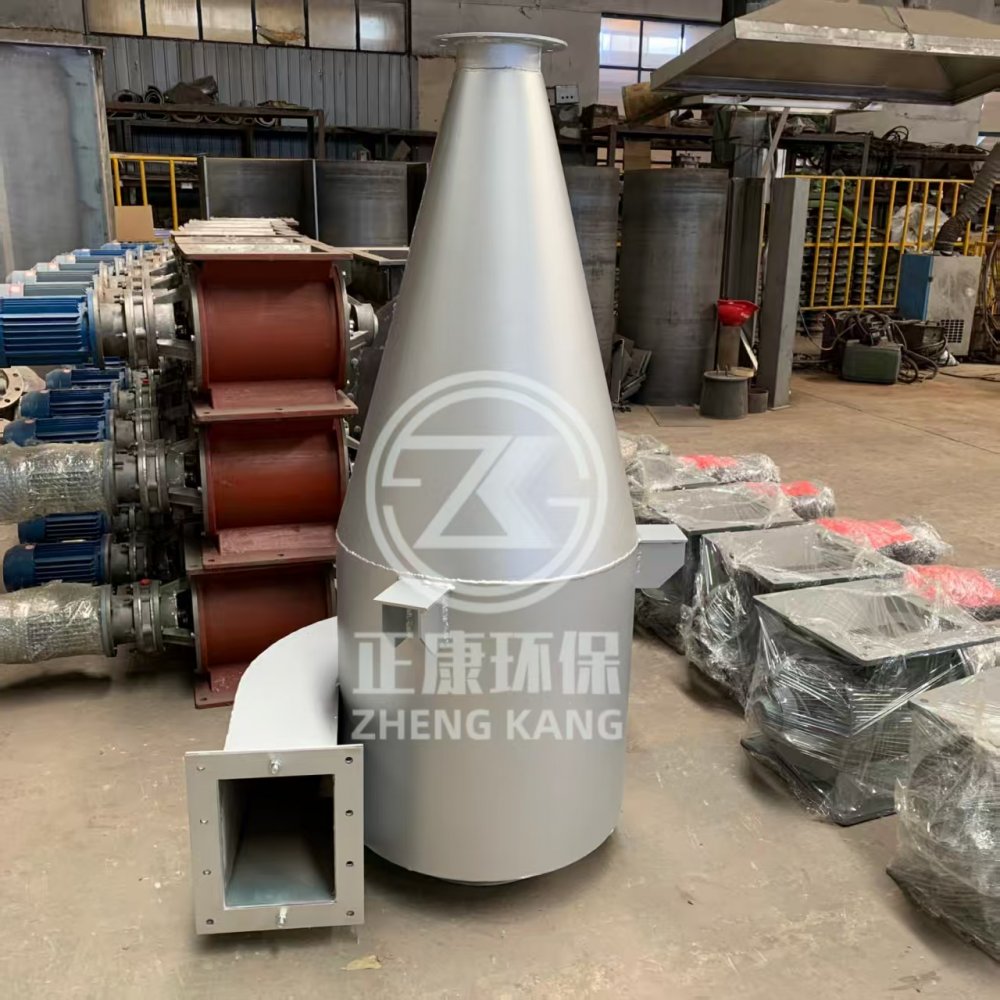
Shell: Cast or welded by cast iron, carbon steel or stainless steel, with square or round flange, pressure-resistant and wear-resistant.
Rotor Impeller: Equipped with 6–12 pieces of blades with precision machining. The clearance between impeller and shell is controlled within 0.3–0.5 mm to ensure air sealing performance.
End Cover & Sealing: Adopted graphite packing or skeleton oil seal to prevent dust leakage and airflow short circuit.
Driving Device: Matched with cycloidal pin gear reducer and motor, direct-coupled or chain transmission, featuring stable operation and low noise.
Bearing Assembly: External bearing structure, kept away from the dust cavity, high temperature resistant and long service life.
3. Working Principle
Air Sealing Principle: The tiny clearance between impeller and shell forms reliable material seal and air seal, cutting off the upper and lower air flow passage and preventing air suction under negative pressure and air leakage under positive pressure.
Discharging Principle: The motor drives the impeller to rotate at a constant speed. Raw materials fall into the blade compartments from the upper part and are discharged by gravity when rotating to the lower position, realizing continuous, uniform and quantitative discharging.
Matching with Cyclone Dust Collector: The cyclone cylinder separates dust by centrifugal force → dust accumulates in the hopper → the airlock discharges dust with air sealed, which completely avoids the sharp drop of dust removal efficiency caused by air leakage.
4. Main Features
Excellent Sealing Performance: Precision clearance plus multiple sealing structure, low air leakage rate and reliable air locking to protect dust removal efficiency.
Uniform and Stable Discharging: Speed adjustable by frequency conversion, controllable feeding flow, no intermittent discharging and no material bridging.
Compact and Durable Structure: Small size and light weight; made of cast iron or stainless steel, with good wear resistance, high temperature resistance and pressure resistance.
Stable Operation & Low Noise: Driven by reduction device, low vibration, operating noise ≤ 65 dB(A).
Easy Installation & Maintenance: Flange connection for simple assembly; external bearings are easy to maintain, few wearing parts and low maintenance cost.
Wide Application Range: Suitable for negative pressure and positive pressure working conditions, normal temperature and high temperature (≤280℃), dry dust and fine granular materials.
5. Main Models and Technical Parameters (Conventional YJD Series)
Model: YJD-02 / 04 / 06 / 08 / 10 / 12 / 16 / 26 / 30
Structure Type: Square flange (Type A), Round flange (Type B)
Material: Cast iron (HT200), Carbon steel (Q235), Stainless steel (304/316L)
Impeller Speed: Conventional 10–30 r/min; Variable frequency 4–22 r/min
Discharging Capacity: 0.5–50 m³/h (depending on model and rotating speed)
Working Pressure: -0.08 MPa ~ +0.05 MPa
Working Temperature: ≤200℃ (ordinary seal); ≤280℃ (high-temperature seal + external bearing)
Motor Power: 0.55–5.5 kW
6. Application Scope
Dust discharge for hoppers of cyclone dust collector, bag dust collector and electrostatic precipitator
Quantitative feeding under silos, hoppers, mixers and dryers
Air lock feeding for positive pressure and negative pressure pneumatic conveying systems
Suitable for dry non-viscous and non-fibrous dust and particles, such as fly ash, cement, lime, flour, wood chips, mineral powder, etc.
7. Installation and Maintenance Points
Installation: Install horizontally with tight sealing of flange gaskets; align inlet and outlet pipelines without mechanical stress; keep motor rotation direction consistent with the marking.
Daily Inspection:
No abnormal noise, jamming or severe vibration during operation;
Bearing temperature ≤70℃, replenish lithium-based grease regularly;
No dust or air leakage at flanges and shaft ends.
Regular Maintenance:
Check impeller clearance and wearing condition of sealing parts every 3 months, replace parts if necessary;
Inspect bearings and reducer lubricating oil every 6 months, clean or replace oil;
Prohibit bulk foreign matters and wet sticky materials from entering the equipment to avoid jamming and material blockage.