
欢迎您的来电
15533772966
产品分类
PRODUCT CATEGORYVentilation butterfly valve

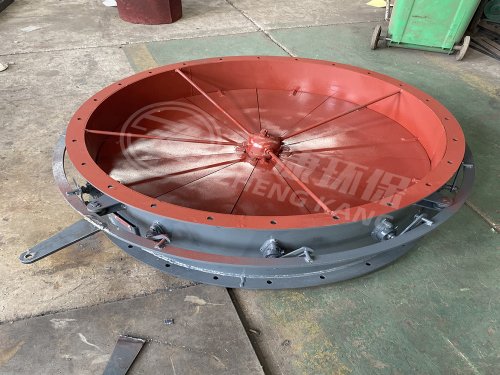



The ventilation butterfly valve (commonly known as a wind gate) is a special regulating valve for low-pressure large-diameter gas pipelines. It achieves the opening and closing of gas flow and regulation by rotating the disc-shaped butterfly plate by 90°. Its core advantages are low flow resistance, light weight, and low cost.
1. Basic Structure
It mainly consists of the valve body, butterfly plate, valve stem, sealing components, and drive device:
Valve body: Circular / Square shell, made of carbon steel / stainless steel by welding or casting, flange connection.
Butterfly plate: Disc-shaped, rotating around the valve stem to block or regulate the gas flow.
Valve stem: Driving the butterfly plate to rotate, with both ends supported to prevent thermal deformation and jamming.
Sealing: Metal or flexible sealing, allowing slight leakage under low-pressure conditions.
Drive: Manual (handle / worm gear), electric, pneumatic, remote controlable.
2. Working Principle
Fully open (90°): The butterfly plate is parallel to the gas flow, with minimal resistance and maximum flow.
Closed (0°): The butterfly plate is perpendicular to the gas flow, blocking the gas flow.
Adjustment (0°–90°): The angle corresponds to the flow rate, with the 20%–70% opening range being the most sensitive.
3. Core Features
✅ Low flow resistance: The full-open resistance is close to that of a straight pipe, resulting in significant energy savings.
✅ Short structure, light weight: It is 30%–50% lighter than gate valves / stop valves, making it easy to install.
✅ Quick opening and closing: The 90° rotation completes the opening and closing, suitable for frequent operations.
✅ Resistant to high temperatures: The metal seal can withstand temperatures of ≤425°C for flue gas / hot air.
✅ Large-diameter economy: It can be manufactured for DN100–DN3000, with low cost.
✅ Capable of handling dusty gas: It is not prone to accumulate dust and is suitable for dust removal / flue ducts.
4. Common Types
By drive: Manual, electric, pneumatic, electro-hydraulic.
By sealing:
Standard type: Metal seal, leakage rate ≤3%, used for ventilation / dust removal.
Sealed type: Flexible seal, leakage rate ≤0.1%, used for smoke barrier.
By structure: Centerline (standard), double eccentric (better sealing), square (rectangular duct).
5. Application Scenarios
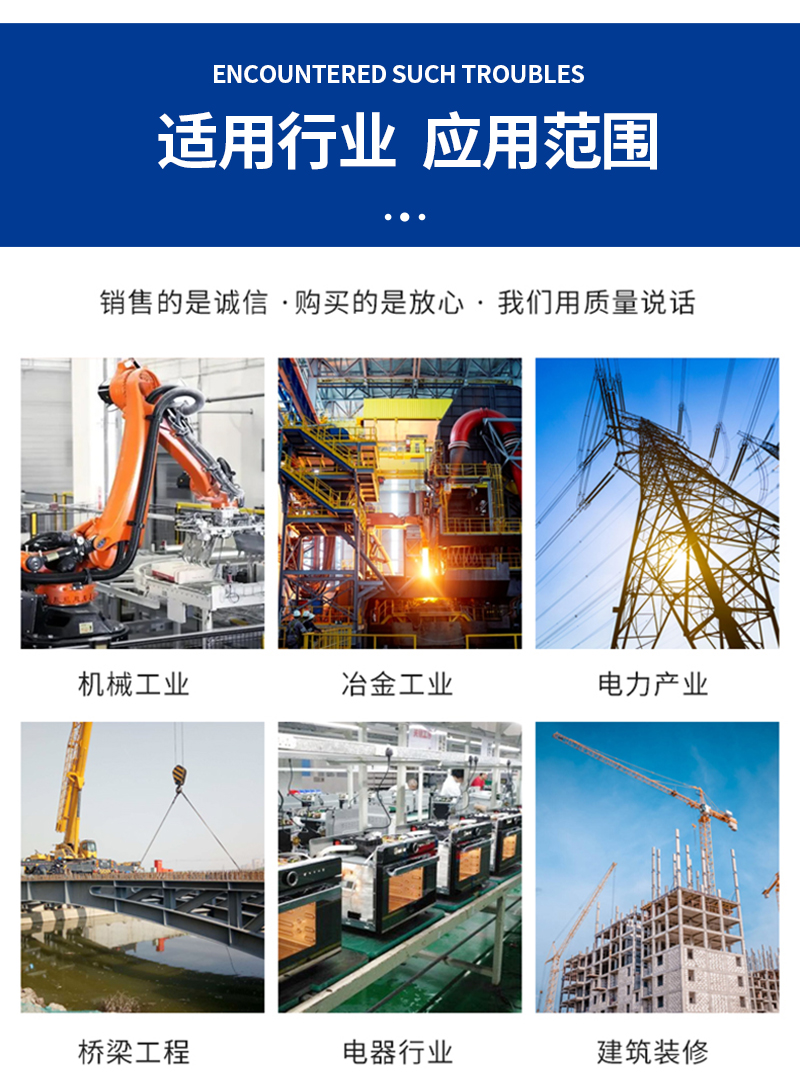
Power plants / steel mills: Boiler flue gas ducts, dust removal systems, desulfurization and denitrification.
Building materials / cement: Kiln exhaust, raw material transportation air routes.
Environmental protection: Waste gas treatment, activated carbon adsorption box, welding smoke purifier air routes.
HVAC: Central air conditioning ducts, shopping malls / factory buildings ventilation.
6. Technical Parameters (General)
Nominal diameter: DN100–DN3000
Nominal pressure: ≤0.1MPa (low pressure)
Medium temperature: Carbon steel ≤300°C, stainless steel ≤425°C
Connection method: Flange (GB/T 9115), welding
Standards: JB/T 8692, GB/T 12238
7. Installation and Selection Tips
Install the pipeline horizontally with the butterfly plate facing downward; for vertical installation, additional support is required.
The direction of the medium flow should be consistent with the arrow on the valve body to avoid reverse pressure-bearing.
For dusty / high-temperature conditions, choose stainless steel + metal seal; for ordinary ventilation, carbon steel is sufficient.