
欢迎您的来电
15533772966
产品分类
PRODUCT CATEGORYStar-shaped discharger

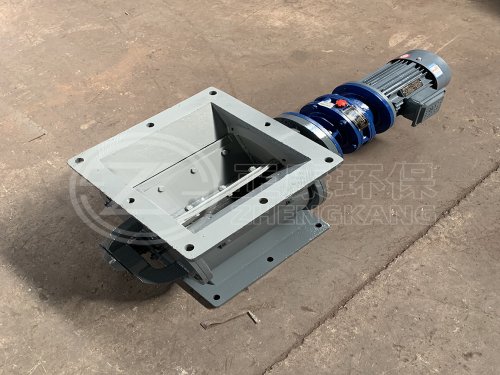


The star discharge device (also known as a closing fan, rotating feeder, or locking valve) is an industrial equipment that integrates quantitative discharging and airtight isolation. It is widely used in dust removal, powder silos, and pneumatic conveying systems.
I. Structure and Components
It is mainly composed of five parts:
Shell: Cast iron / carbon steel / stainless steel cylinder, with flanges at the top and bottom, used to connect the silo and the discharging equipment.
Rotor (rotor): 6–8 star-shaped blades, with a very small gap (about 0.1–0.3mm) with the shell, forming a sealed cavity.
Drive unit: Motor + reducer, driving the rotor to rotate at a low speed (5–20 rpm).
Sealing components: Shaft end seal to prevent dust leakage and gas crossover within the system.
Maintenance port: Some models have an observation window for easy maintenance.
II. Working Principle
The core is volumetric conveying + dynamic sealing:
Inlet: Dust / particles from the upper silo fall into the empty space between the rotor blades by gravity.
Rotary conveying: The rotor rotates, transporting the material cavity from the inlet to the outlet.
Discharging + Locking: The material is discharged from the bottom; adjacent blades always adhere to the shell, blocking the up and down air flow, preventing air from entering the negative pressure system or leakage in the positive pressure system.
III. Main Types
Standard type: Normal temperature, normal pressure, used for conventional dust removal ash hoppers.
Pressure-resistant type: Suitable for high negative pressure / positive pressure pneumatic conveying systems.
High-temperature resistant type: Can withstand 200–400℃, equipped with heat-resistant bearings and seals.
Material: Cast iron, carbon steel, stainless steel (food / anti-corrosion).
Interface: Square (A type), circular (B type).
IV. Performance Characteristics
Advantages
Good sealing: Effectively isolates pressure difference, stabilizing system pressure.
Quantitative and uniform: Constant rotational speed, stable discharging volume, adjustable by frequency.
Compact structure: Small volume, easy installation, reliable operation.
Low wear: Precise gap between rotor and shell, suitable for dry dust / small particles.
Limitations
Not suitable for wet, viscous, or agglomerated materials (easily clogged).
Hard abrasive materials will accelerate rotor wear.
V. Application Scope
Dust removal system: Ash hoppers for bag / electrostatic dust collectors.
Pneumatic conveying: Uniform feeding and dust locking in positive / negative pressure pipelines.
Silinder discharging: Cement, fly ash, grains, chemical powder materials, etc.
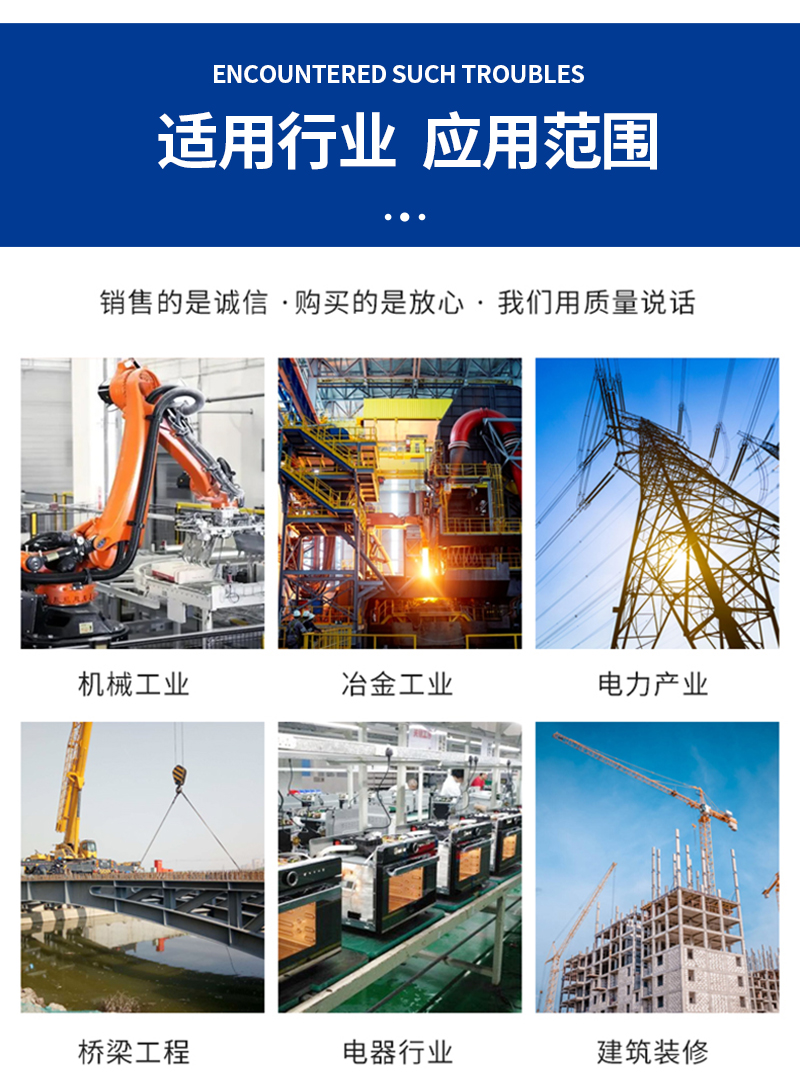
Industry: Environmental protection, power, cement, metallurgy, chemical, grain processing, etc.
VI. Selection Tips
Material characteristics: Particle size, humidity, temperature, abrasiveness.
Discharge volume: Hourly discharging volume (m³/h or t/h).
Pressure level: System negative pressure / positive pressure value.
Flange size of inlet and outlet: Specifications of the flanges at the inlet and outlet.
Material and seal: Choose based on anti-corrosion, food grade requirements.
VII. Maintenance Tips
Regularly inspect rotor wear and sealing components, replace them in time.
Maintain lubrication of bearings to prevent dust from entering.