


欢迎您的来电
15533772966
动态分类
DYNAMIC CATEGORY热门产品


Working Principle and Common Faults of Unloader
文章摘要:
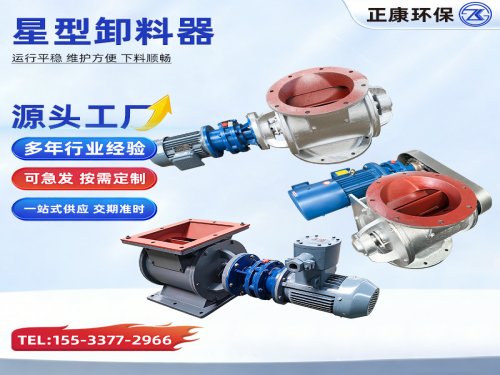
Working Principle of Unloader The commonly used type of unloader is star type unloader (rotary airlock feeder). It is a special device for quantitative discharging and air-locking feeding, matched with dust removal equi
Working Principle and Common Faults of Unloader
1. Working Principle of Unloader
The motor drives the rotor impeller to rotate at a constant speed through the reducer. The divided cavities of the impeller separate and store materials from the silo.
The upper part connects to the silo feed inlet; materials fall into the impeller cavities and are rotated to the lower discharge outlet.
Relying on the tiny clearance between the impeller and the casing, it locks the negative pressure of the air duct and prevents air leakage and air channeling, while realizing continuous, quantitative and uniform discharging.
It is suitable for powder, granular and small lump materials, commonly used for discharging at dust collector hoppers, silo bottoms and the end of screw conveyors.
2. Common Faults, Causes and Phenomena
- No discharging or low discharge volumeImpeller material adhesion and buildup, damp and agglomerated materials, too fast or too slow rotating speed, feed inlet blockage, excessive clearance of impeller causing air leakage and channeling.
- Equipment jamming, unable to rotate, motor overload and trippingHard foreign matter falling into the casing, jamming by agglomerated materials, bearing damage and shaft seizure, impeller deformation and casing scraping, reducer failure.
- Abnormal casing noise and severe scraping soundImpeller deformation, blade wear and eccentricity, installation misalignment, foreign matter stuck between impeller and casing.
- Air leakage, air channeling and poor air-locking effectWidened clearance between impeller and casing due to wear, damaged end cover seal, aging flange gasket, casing deformation.
- Dust leakage and flange ash escapingDamaged sealing gasket, loose bolts, aging and worn shaft end packing/sealing parts.
- Bearing overheating, abnormal noise and oil leakageInsufficient bearing lubrication, deteriorated grease, shaft misalignment, aging oil seal causing oil leakage, dust entering the bearing housing.
- Unstable and uneven discharging flowUnstable rotating speed, poor material fluidity, material adhesion inside impeller cavities, improper frequency conversion speed regulation parameters.
